Micro Objective - Park Explorer - 50

Media.png
 
SponsoredbyQuestScouts.png

Quest Scouts inspires your to squeeze the most out of life while collecting real-life, physical badges.

The ultimate full moon shot. Dean Potter walks a highline at Cathedral Peak as the sun sets and the moon rises. Shot from over 1 mile away with a Canon 800mm and 2X by Mikey Schaefer. This shot was part of a bigger project for National Geographic called The Man Who Can Fly. 

Objective:

Watch the late Dean Potter highline at Cathedral Peak, then weigh in on this activity.

Details:

1) Watch the video above from Reel Water Productions. The ultimate full moon shot. Dean Potter walks a highline at Cathedral Peak as the sun sets and the moon rises. Shot from over 1 mile away with a Canon 800mm and 2X by Mikey Schaefer. This shot was part of a bigger project for National Geographic called The Man Who Can Fly.

2) Slack lining and base jumping are illegal in US National Parks, yet there is a group of enthusiasts who do it anyway. Issues of slack lining include environmental damage and safety. In the comments below, tell us what you thought about the video, as well as how you feel about slack lining in National Parks.


Micro Objective - Life List - Park Explorer - 50

Research.png
 
SponsoredbyQuestScouts.png

Quest Scouts inspires your to squeeze the most out of life while collecting real-life, physical badges.

Objective:

Add a National Park to your life list.

Details:

"If you have a goal, write it down. If you do not write it down, you do not have a goal- you have a wish." -Steve Maraboli

Some people call them "bucket lists," some call them "life lists," while others may call them something else entirely. Whatever you call it, a life list is a list of goals you'd like to accomplish over your lifetime.

Do you have a life list yet? This micro objective is the first in many to come that will inspire you to add items to your list. 

1) If you don't have a life list, start one! You can start one online or on paper. Make sure that the format you choose will allow you to easily refer to your list in the future. If you've already started a life list, great! Pull it out and get ready to add to it.

2) Spend 5-10 minutes researching parks that meet both of the following criteria:

a- The park is a NATIONAL PARK. (This national park can be in any country. Step outside of your comfort zone!)

b- You have never considered visiting this park in the past. Maybe you've never even heard of it!

3) After doing a little bit of research, add the national park to your life list.

4) Share which park you've added to your list in the comments below.


Micro Objectivet - Park Explorer - 50

Literature.png
 
SponsoredbyQuestScouts.png

Quest Scouts inspires your to squeeze the most out of life while collecting real-life, physical badges.

Objective:

Learn about efforts to make National Parks more geocacher friendly.

Details:

In our “Find 300” objective we mentioned that in many US National Parks, geocaching is either banned or severely limited. But why? And is there anything we can do to come to a more cache friendly agreement with the National Parks? Eric Schudiske wrote a great article for geocaching.com about a woman working toward brining geocaching to North Cascades National Park. 

1) Read the article "One Woman's Journey Brings Physical Geocaches to National Parks" by Eric Schudiske.

2) Let us know what you thought about the article in the comments below. 


Micro Objective - Park Explorer - 50

Media.png
 

Quest Scouts inspires your to squeeze the most out of life while collecting real-life, physical badges.

How Wolves Change Rivers by Ian McKenzie (Sustainable Human)

Objective:

Learn about what happened when wolves were re-introduced to Yellowstone National Park.

Details:

1) Watch the video above from the youtube channel Sustainable Human in which Ian McKenzie.

2) Let us know what you thought of it in the comments below.

Park Explorer - Find - 250

Find250.png
 
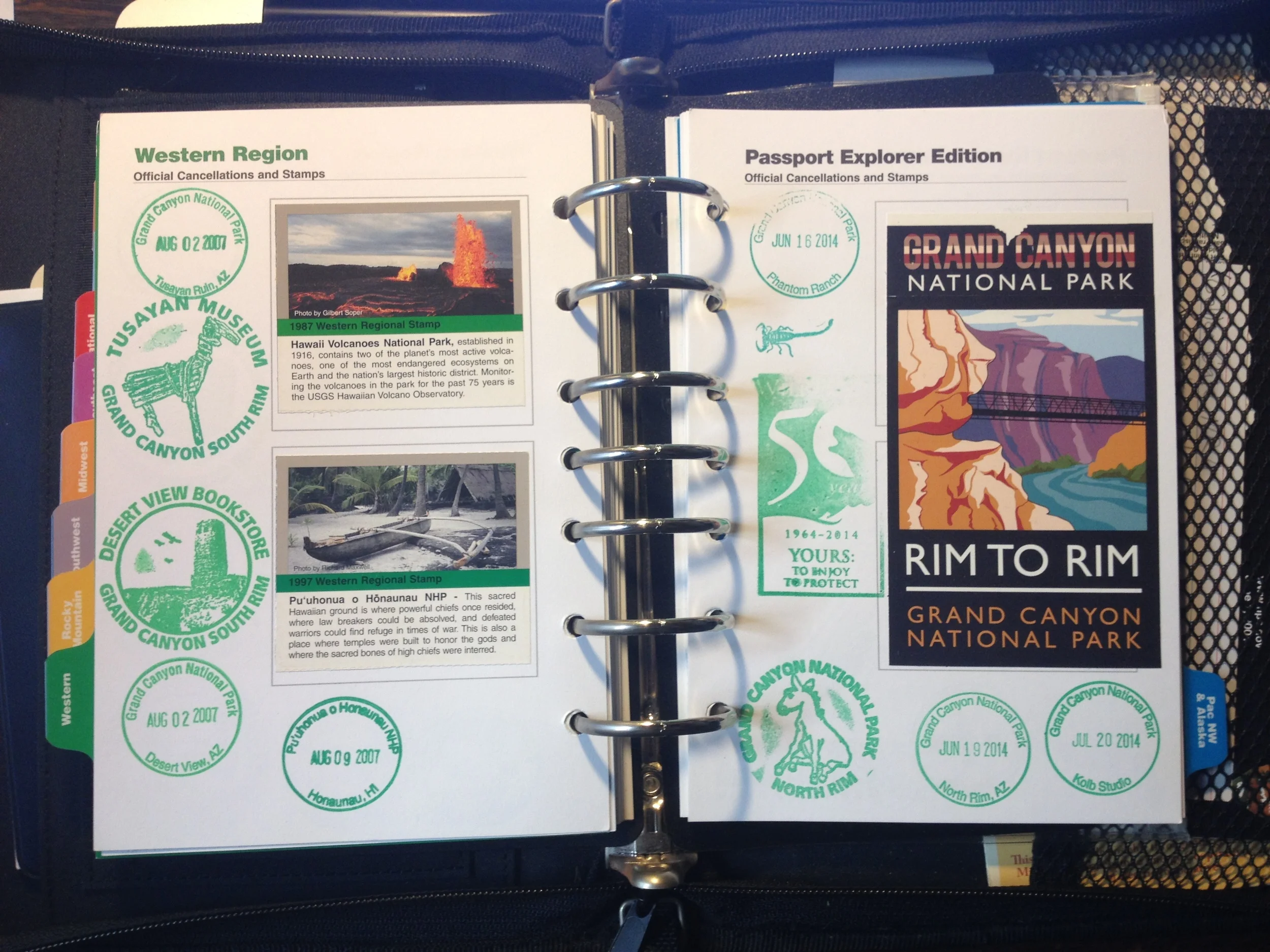
An example of National Park stamps and park passport.

An example of National Park stamps and park passport.

Have you ever heard of National Park Cancellation Stamps? National Park Cancellation Stamps are available at almost every National Park in the United States. While less extensive, many of Canada's National Parks also have stamps. These rubber stamps sit at ranger stations and gift shops, and can be collected in an official passport book, in a blank notebook, or on a loose piece of paper. Collecting stamps over time allows you to create a log of your visits to some of the most beautiful places in the world. 

For this find objective, we're asking you to visit a National Park and attain a stamp. Whether you're a seasoned stamp collector or this is your first stamp, we hope that this will become a great excuse for you to visit a National Park before this quest expires. Summer is calling- are you ready for it?


Objective:

Collect a national park cancellation stamp.

Details:

1) Travel to a location that contains a national park passport cancellation stamp.

US National Stamps (Any site on this list will fulfill this objective.)

Canadian Stamps

(If any of you stumble upon lists that include other countries, please send them our way.)

2) Stamp your passport! (A piece of paper or postcard can be stamped as well!)

3) Share a photo of your cancellation stamp on Instagram or Twitter with the tag #QuestScouts. Alternatively, you can also share your hide in our Facebook group.

4) Tell us about your experience visiting a park and attaining your stamp in the comments below. What park did you go to? What did you think of the park? What did you do while you were there? 

Park Explorer - Find - 300

Find300.png
 

Objective:

Make a find* within the borders of a National Park.

Details:

Are geocaches allowed in National Parks in your country? If you live in the US, the answer is "no" for the most part. While rules vary slightly from park to park, physical caches are rare in US National Parks. However, geocaches that do not have a physical container are often abundant. Don't let the lack of physical caches deter you from geocaching in National Parks. Virtual caches are still in some parks, and earth caches are currently allowed with approval. (Although approval can be tough to get!)

1) Find and log a geocache or letterbox hidden within the borders of a National Park.

Note: While we encourage you to visit a national park, national monuments will be accepted too. A list of national parks can be found here. PLEASE DO NOT use a state park, national forest or national recreation area for this objective.

2) Take a photo of yourself at the hide location and post it on Instagram or Twitter with the tag #QuestScouts. Alternatively, you can also share your hide in our Facebook group.

3) Tell us what cache you found in the comments below! If applicable, include the geocaching or letterboxing number. 

*A "find/hide" can be either a geocache or letterbox. Not familiar with either? Watch this video by Groundspeak, the #1 lister of geocaches or read about letterboxing from Atlas Quest. However, if you've never geocached or letterboxed, we highly suggest you start with a different find objective. It's best to make 100+ finds before you hide.

Park Explorer - Games - 200


Objective:

Grab some friends and play an outdoor game at the park.

Details:

Sunny days are meant for the park! Grab some friends, grab some "lawn games" and head to your nearest grassy oasis. 

1) Grab a friend or two and head to the park.

2) Play an outdoor game while at the park.

Examples of outdoor games include lawn bowling, lawn darts, bocce ball, horse shoes, and ring toss. 

3) Take a photo of yourself or your friends playing the game and share it on Instagram or Twitter with the tag #QuestScouts. Alternatively, you can also share your art in our Facebook group.

Park Explorer - Media - 150

Media150.png
 

Objective:

Watch one of the park themed documentaries from the list provided.

Details:

1) Watch one of the park themed movies or documentaries listed.

2) Let us know which you watched and what you thought of it in the comments below.

George Melendez Wright was the first person in history to propose and conduct a survey of wildlife and plant life conditions in America's parks, resulting in landmark reports that led to the protection of natural species throughout the park system.

From award-winning documentary filmmaker E. Chai Vasarhelyi and world-renowned photographer and mountaineer Jimmy Chin, comes FREE SOLO, a stunning, intimate and unflinching portrait of free soloist climber Alex Honnold, as he prepares to achieve his lifelong dream: climbing the face of the world's most famous rock... the 3,200ft El Capitan in Yosemite National Park...
Learn more at: http://johnmuirmovie.com/ John Muir is said to have tied himself into a tree during a giant wind storm. Here is how that story inspired us as readers, mystics and adventurers. The Unruly Mystic™ : John Muir is my personal ode to Muir which started the first time I went to Yosemite.

VIRUNGA IS THE INCREDIBLE TRUE STORY OF A GROUP OF BRAVE PEOPLE RISKING THEIR LIVES TO BUILD A BETTER FUTURE IN A PART OF AFRICA THE WORLD HAS FORGOTTEN AND A GRIPPING EXPOSE OF THE REALITIES OF LIFE IN THE CONGO. In the forested depths of eastern Congo lies Virunga National Park, one of the most bio-diverse places in the world and home to the last of the mountain gorillas. In this wild, but enchanted environment, a small and embattled team of park rangers - including an ex-child soldier turned ranger, a carer of orphan gorillas and a Belgian conservationist - protect this UNESCO world heritage site from armed militia, poachers and the dark forces struggling to control Congo's rich natural resources. When the newly formed M23 rebel group declares war in May 2012, a new conflict threatens the lives and stability of everyone and everything they've worked so hard to protect.